Contact: (514) 866-6500
info@niobaymetals.com
Follow Us:
Top
 

James Bay

High-grade critical minerals. Mined safely, in Canada.

The James Bay Niobium project, formerly known as the Argor Project, is 100% owned by NioBay Metals.

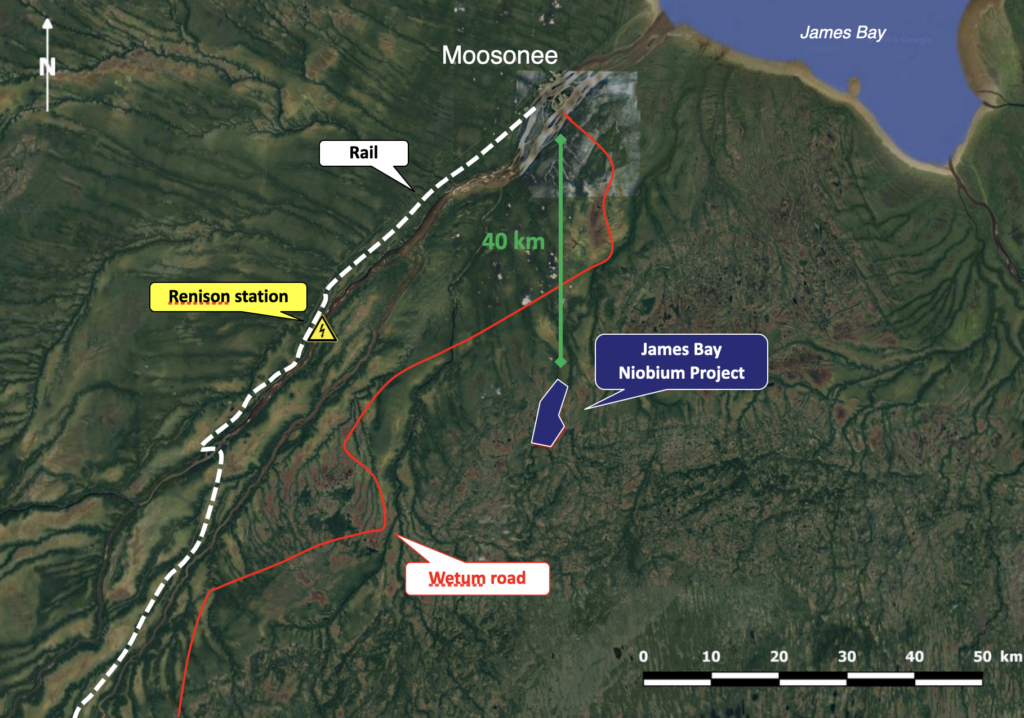
It is located in Northern Ontario, Canada, within the Moose Cree Homeland in an area covered by Treaty 9, east of the Township of Carroll in the district of Cochrane and 45 km south of the municipality of Moosonee. It is situated in a region with well-established infrastructure, including power and access to transportation corridors, as illustrated in this map.

The James Bay property comprises the Crown Mining Lease (# CLM11) and covers a total of 2,530 hectares.
Project Development

The Project was originally discovered in 1966 by Consolidated Morrison Explorations and remained relatively unexplored until it was acquired by NioBay Metals in 2016. Since this acquisition, NioBay has advanced the project through modern exploration techniques, and published a mineral resources estimate (MRE) and a preliminary economic assessment (PEA) in 2020.

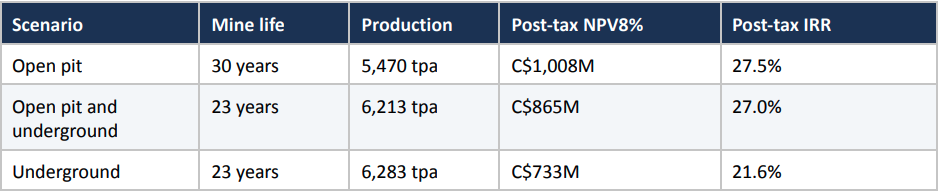
James Bay PEA Highlights

These PEA results indicate that the project has promising economic potential, which is supported by a significant niobium deposit. The study outlines a viable open-pit mining scenario with conventional processing methods, emphasizing both technical and economic feasibility. These factors collectively position the James Bay Niobium project as a strategic asset in the critical minerals sector, especially given the growing demand for niobium at the global level in steel alloys and lithium-ion batteries.

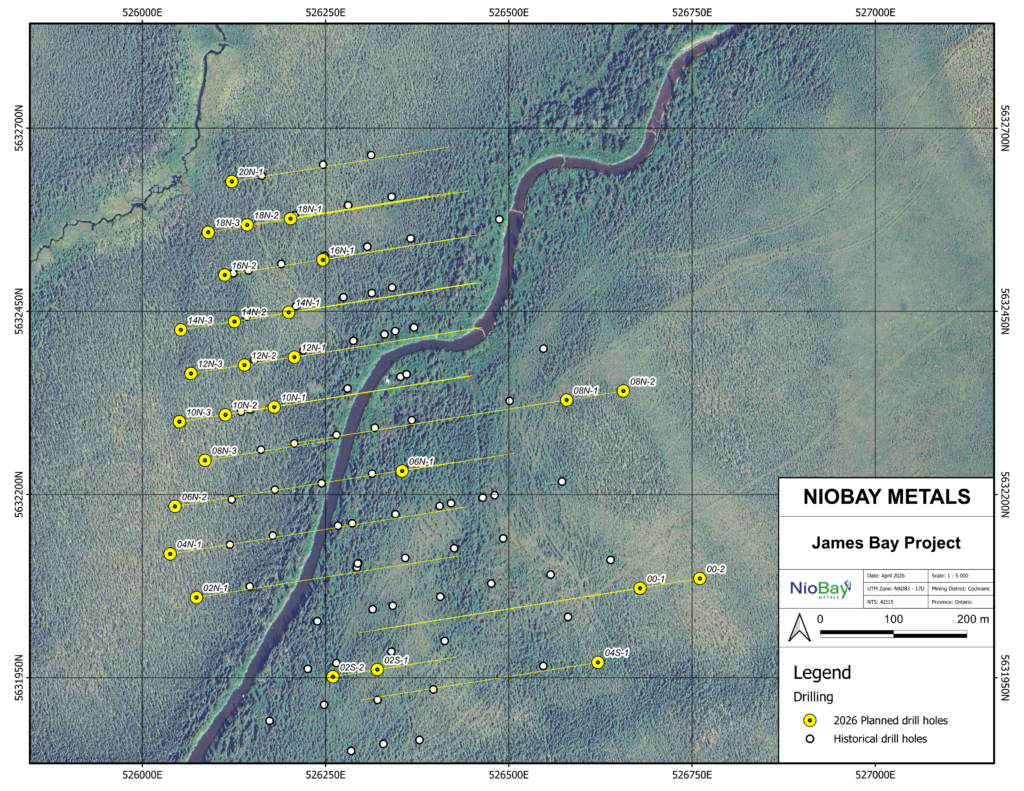
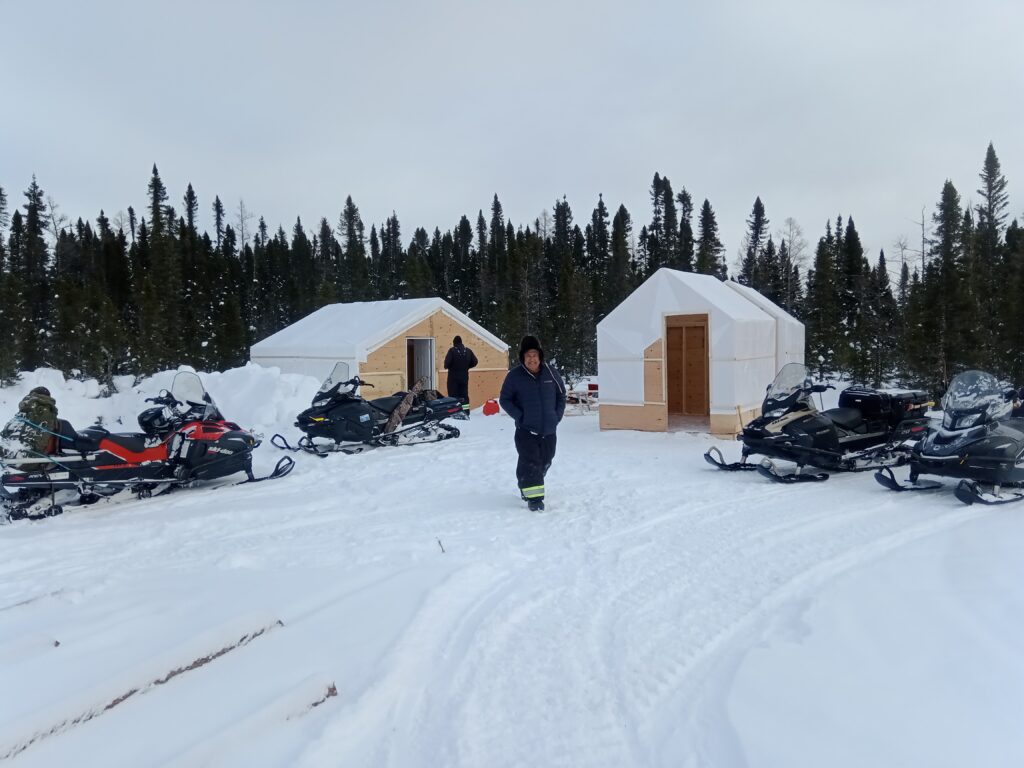
In October 2025, NioBay received authorization and permits from the Government of Ontario to conduct exploration at James Bay for the following three years. This will allow the company to advance a systematic drilling campaign and onsite technical work. Our technical team is now conducting an efficient, low-impact exploration program, including 10,000 metres of planned drilling to support resource growth and depth expansion.

Estimated advantages of the project (Preliminary Economic Study, 2020)

Number of direct jobs: 400

Mine life: up to 30 years

Contribution to GDP: $7 billion

IRR after tax: 21.6%

Geology and Mineralization

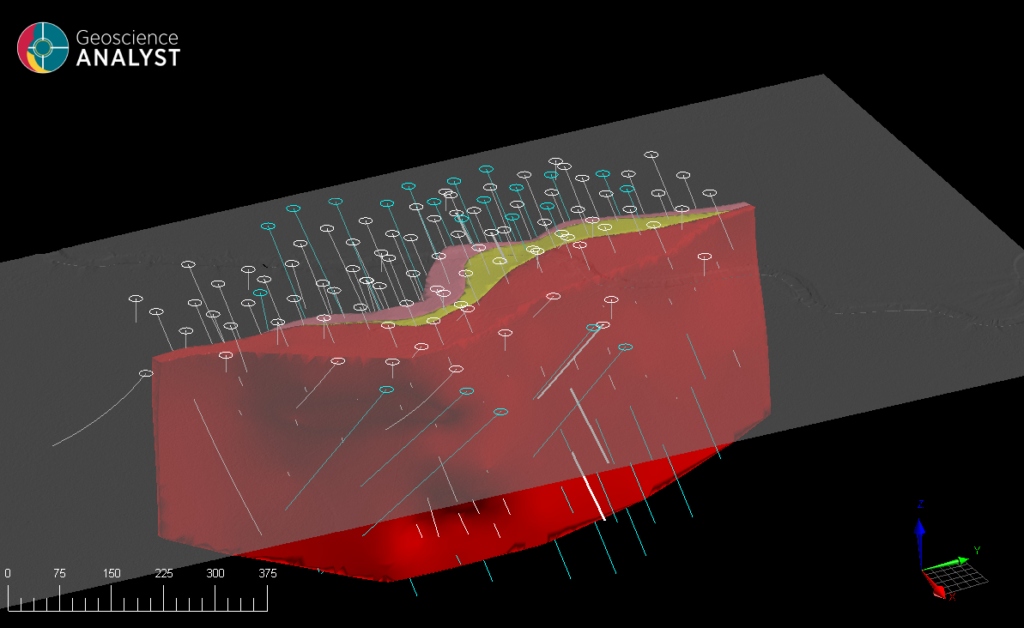
The Project is an open-depth, niobium-bearing carbonatite deposit of pyrochlore that measures 800m long by 320m. The area has approximately 32m of overburden in lowland ground and is amenable to be mined either by open pit, underground or a combination of both.

A pyrochlore mineralization is contained in an intrusive complex of pyroxene-rich carbonatites dating from the Huronian Orogen and generally orientated north-south. Intrusions of hornblende gneiss abut the complex on its east and west sides. The general dip is sub-vertical, orientated slightly to the east.

Paleozoic sediments consisting of altered, silty, sandy, argillaceous sandstones discordantly cover the carbonatite complex. These sandstones vary in thickness from 12 to 30 meters, and lie horizontally over the carbonatites, covering them completely. Unconsolidated silty glacial sediments between 6 and 10 meters deep cover these sandstones, and are themselves covered by spongy peat (muskeg) 1 to 2 meters deep.

Map of the drilling work performed in 2026

James Bay 3D Deposit

Community relations

The Moose Cree First Nation (MCFN) and NioBay have a Protection Agreement (PA) in place that provides for transparent communication and reflects the shared commitment to environmental protection.

Since receiving its exploration permits in October 2025, NioBay has continued its ongoing dialogue with the Moose Cree First Nation, and has updated the exploration program to reflect community feedback, including the enhancement of environmental measures and wildlife considerations, as well as a full drill-site remediation plan. The company is also committed to maximizing the participation of local businesses and employees in its exploration activities.

NioBay plans to continue to work with communities who have acknowledged indigenous rights within the area of the project to mitigate potential impacts and provide a share of the potential benefits the project will create.

Documents

Report & Appendices – combined, April 2024
PEA Presentation, October 2020
Technical Report, August 2020
Project description, September 2019